


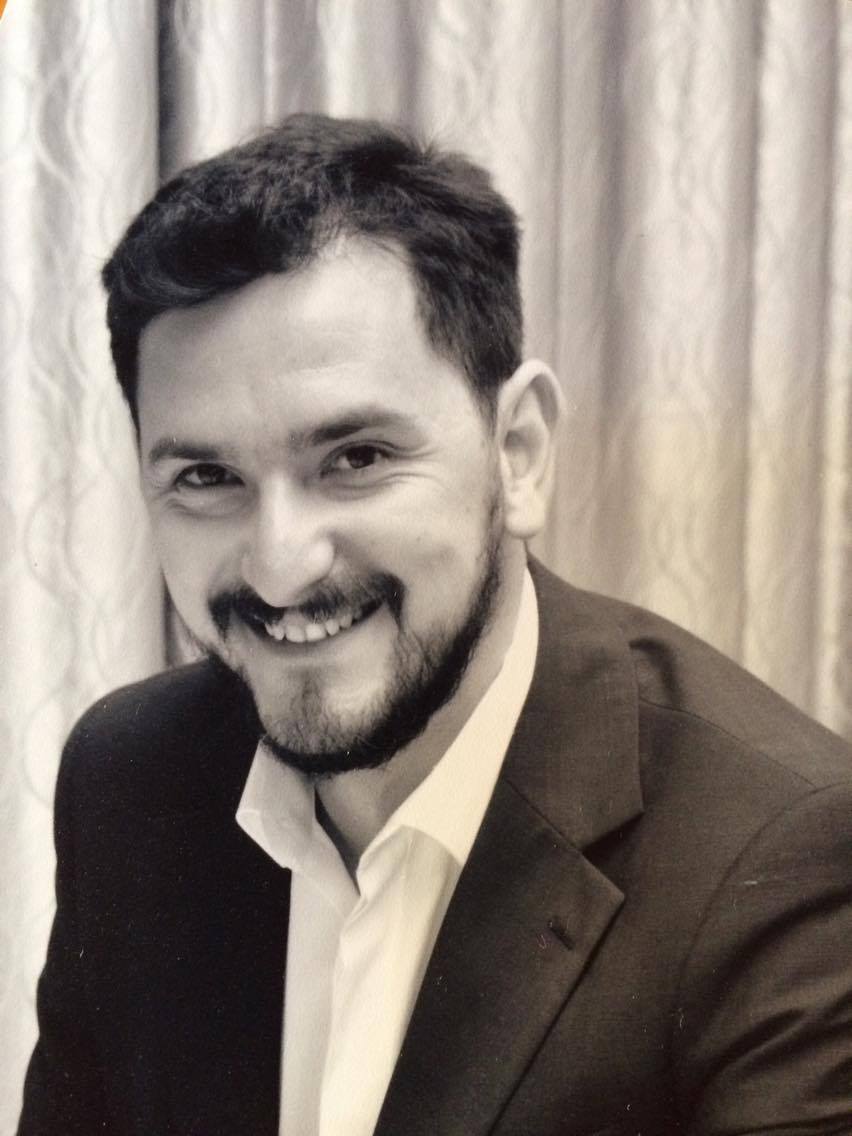
 Paschalis Pechlivanis is currently an Assistant Professor in the History of International Relations at Utrecht University. Between September 2018 and February 2019, he was an ICUB Fellow, with the project ‘An Uneasy Triangle: Ceausescu, the Colonels and the Greek Communists (1967-1974)’. His research interests lie at the intersection of International History and International Relations, with a specific focus on the Cold War, US Foreign Policy and post-1945 European and Balkan History.
You were awarded an ICUB Fellowship for Young Researchers in 2018. What made you apply for this fellowship competition?
I applied for the Young Researchers Fellowship at ICUB in order to facilitate the research on my project on Ceausescu’s relations with the Greek Junta and the Greek Communists. ICUB seemed as the perfect academic host to pursue my archival digging and also to reflect on the structure of the project by engaging with scholars that were acquainted with my research interests.
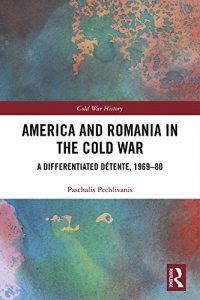 Your monograph, America and Romania in the Cold War A Differentiated Détente, 1969-80, was published by Routledge in 2019. What sparked your interest in Romanian history?
In academic terms my interest in Romania developed due to the exceptional role that the Romanian Communist regime had throughout the Cold War pursuing a rather autonomous foreign policy, quite often with global aspirations.
On a personal level, my connection with Romania runs deeper. I happened to spend my last high school year in Romania and thus learning the language and forging lifelong friendships there. Naturally, I got acquainted with Romanian history at a more substantial level and later on when I was contemplating about my PhD studies, I chose to focus on a Romanian related theme.
How would you describe your experience of doing research in Romania, compared to previous fellowships?
As in every place, archival research has certain challenges. Nonetheless, in the recent years several changes in the rules and the procedures allowed me to access most of the material I was interested in.
You are now an Assistant Professor in the History of International Relations at Utrecht University. How much of Romanian history do you include in your teaching?
Romanian history is part of my teaching portfolio. As of this academic year I am teaching a research-led master’s seminar titled “A Cold War Microcosm: The Balkans (1945-1989)”. Of course, Romania plays a prominent role within the course, especially regarding its footprint on the Global Cold War.
What impact did the ICUB Fellowship have on your research?
The ICUB Fellowship was very beneficial in developing my research agenda as it gave me the opportunity to finalise my archival work for the article I wanted to write and also add the final touches on my monograph which you mentioned above. The welcoming and stimulating academic environment at ICUB with the weekly lunchtime seminars was also extremely helpful as it provided a sense of community and made my stay in Bucharest a pleasant experience both in academic and non-academic terms.
Why do you think researchers should apply for this fellowship?
I strongly recommend to those who are interested to apply especially if they are looking for a quiet but engaging place where they can really focus on their work and develop their research projects.