


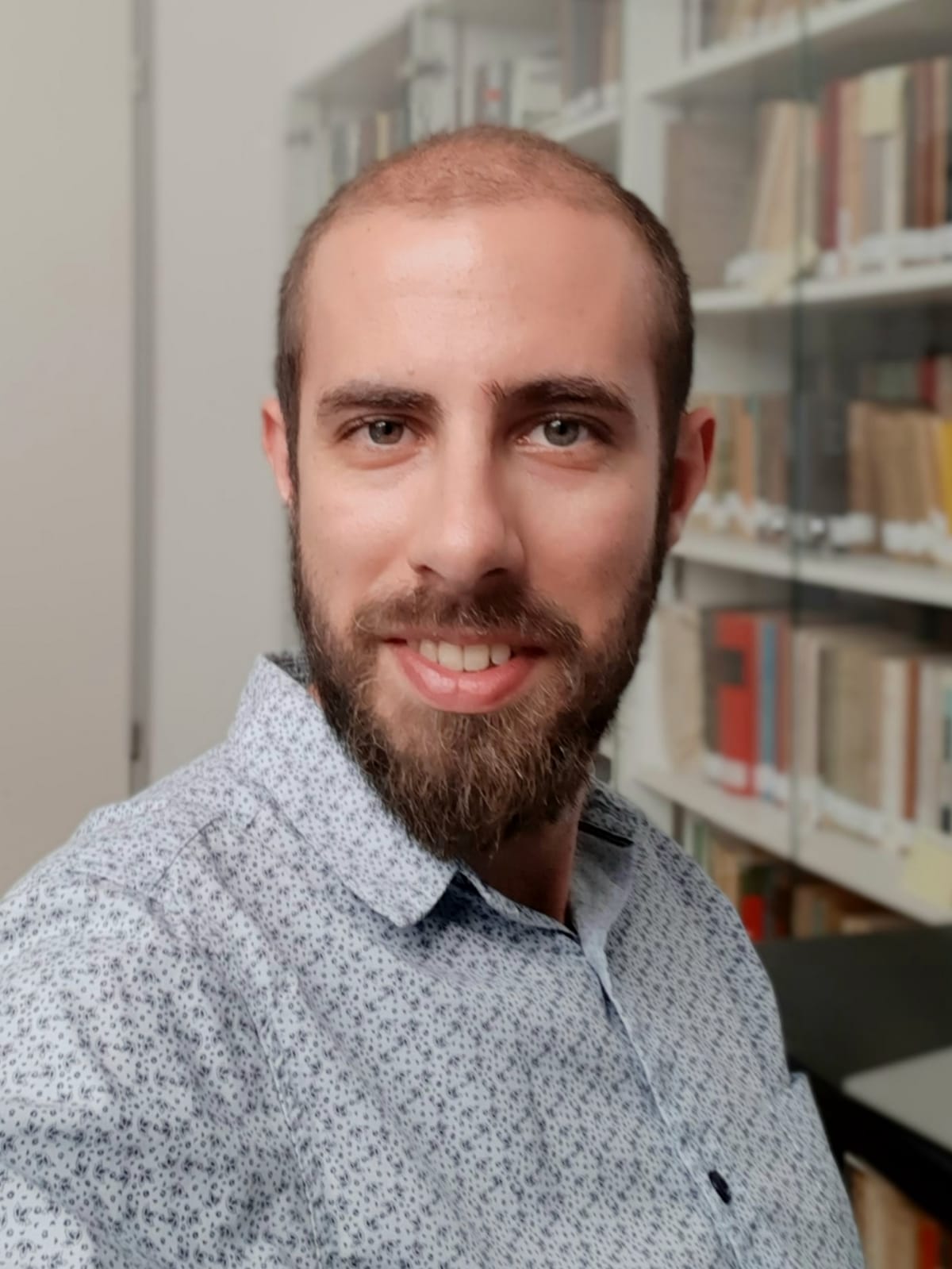
 Radu Dipratu is a researcher at the Institute for South-East European Studies of the Romanian Academy. He received his PhD in 2017 from the Faculty of History, University of Bucharest, with a thesis on Catholics in the Ottoman Empire in the early seventeenth century. He was a ‘Ștefan Odobleja’ fellow at the New Europe College in Bucharest during the 2018-2019 academic year, with a project on Ottoman-Venetian diplomatic relations. His main research interests are Catholics in the Ottoman Empire and the Ottoman capitulations (‘ahdname) of the early modern era.
In July 2020 he was awarded an UEFISCDI Postdoctoral Fellowship, for the project Muslim-Christian Diplomacy Revisited: Ottoman Capitulations (‘ahdnames) Granted to France and England in the Sixteenth and Seventeenth Centuries. Starting with January 2021 he will also be part of the first ERC Advanced Grant conducted in Romania, Early Arabic printing for the Arab Christians. Cultural transfers between Eastern Europe and the Ottoman Near-East in the 18th century (TYPARABIC), coordinated by Ioana Feodorov.
You started an ICUB Fellowship for Young Researchers in January 2020, with a project entitled Letters to Jerusalem: Ottoman High-Ranking Officials’ Dealings with Catholics in the First Half of the Seventeenth Century. Could you detail a bit your research topic?
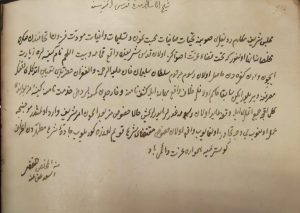 While gathering material in the Venetian State Archives, I stumbled upon several letters preserved as copies in the registers kept by the bailo in Constantinople, sent by various high-ranking Ottoman dignitaries to local officials in Syria and Palestine. Not only are such letters between Ottoman officials rare, but those involving Catholics in Jerusalem are even harder to come by. Thus, I realised that a research project could very well be built upon these documents. I had already gathered some experience working on Catholics in the Ottoman Empire during my PhD studies, where I analysed the religious articles included in 17th-century Ottoman capitulations (‘ahdname); however, I had never dealt with this type of documents. The seven letters which form the main sources of my research at ICUB were sent between 1613-1637 by a grand vizier, two grand muftis (şeyhülislam) and a chief harem eunuch to governors and judges in Damascus and Jerusalem. Most of them accompanied imperial edicts (ferman) sent by the sultan for the well-being of Franciscans at the Church of the Holy Sepulchre in Jerusalem and the Church of the Nativity in Bethlehem. Both the imperial edicts and letters were sent upon the Venetian bailos’ petitions, which shows that the Republic had a very active involvement in religious matters during a time when historiography tends to picture a somewhat French monopoly over Catholics in the Ottoman Empire. The primary topic discussed in these letters concerns the Franciscans’ protection from fiscal harassments, as a part of the taxes they collected from European pilgrims visiting the Holy Sites were directed to the upkeep of important Muslim establishments, such as the Haseki Sultan İmareti (‘soup kitchen’) in Jerusalem, established during the reign of Suleyman by his famous consort Hürrem/Roxelana, and to the (Blue) Mosque compound of Ahmed I in Istanbul. Chief eunuch İdris Agha’s letter to the kadı of Jerusalem is by far the most important, as it showcases the struggle between Catholic and Orthodox monks to control the Holy Sites in Jerusalem and Bethlehem. Apart from shedding new light over the inner workings of the Ottoman administration, these letters showcase the intricate role played by different religious communities in the Imperial construct.
You are also a researcher at the Institute for South-East European Studies (Romanian Academy). How do you balance your activity at the Academy with your personal research projects?
The Institute for South-East European Studies (ISSEE) provides a stimulating working environment, and I have been continuously encouraged to develop my personal research projects. I prioritise my tasks (deadlines are sometimes helpful!) and try to keep a steady pace in all of them. However, research in humanities seldom follows a straight path, and this is where having two ongoing activities comes in handy: when you do not find the necessary materials/information for one project or simply get stuck in the writing process, you can jump to the other one. I think the key is to have your ongoing projects related in a loose way. For example, both my current activity at the Institute for South-East European Studies and my ICUB projects are offshoots from my PhD thesis. When looked upon separately, one may not necessarily see a connection between them, but I regard them as part of a single wide-ranging scheme.
 A recently won ERC Advanced Grant will be implemented at the Institute for South-East European Studies and you will be part of the team. Can you tell us some more about this grant?
The ERC Advanced Grant “Early Arabic printing for the Arab Christians. Cultural transfers between Eastern Europe and the Ottoman Near-East in the 18th century” (TYPARABIC), having Ioana Feodorov as its Principal Investigator, will be implemented at the ISSEE during the next five years. Two of its main objectives are to research the technological transfer of the printing press from Wallachia and Moldova to the Levant and to compile a critical inventory of all Arabic books printed in the 18th century in the Danubian principalities, as well as in Syria, Lebanon and adjacent lands. Besides colleagues from the Institute, TYPARABIC assembles an international team of scholars with different areas of expertise such as the history of the printing press, the history of oriental Churches, linguistics, and history of art. I will be involved in the Ottoman-Turkish segment of the project, as the Ottoman Empire provided the setting for these transfers to take place. Although I came across early Arabic printing in my studies so far (works produced in the workshops of Savary de Brèves and İbrahim Müteferrika, a native of Cluj, who was the first Muslim to run an officially endorsed Arabic printing press in Istanbul) the ERC Grant will bring lots of new challenges for me, and I am excited to start working.
You were recently awarded a postdoctoral grant by the Executive Unit for Financing Higher Education, Research, Development and Innovation (UEFISCDI). How was your experience of applying for a national grant?
It was surprisingly straightforward. The online application form worked well, and I quickly got through the first stage of validation. The peer reviews took a while, and while two of the three evaluators appreciated my project, the third downgraded me quite a bit. Luckily, they accepted most of my comments on their critiques, and in the end, I received a few extra points. After being selected for the grant, there was another online form to be filled in; this one, however, did not go as smooth. While certainly more helpful than paperwork, it is not intuitive, and you cannot complete it on your own. I had it rejected more than five times because I did not fill in a section correctly. Thankfully, I got help from the officer responsible for my project. I planned to start this postdoctoral grant right after the ICUB Fellowship ended, but I was compelled to start it earlier, and thus I had to cut short my ICUB Fellowship.
What impact did the ICUB Fellowship have on your research? Which are, in your opinion, the main advantages of applying for an ICUB Fellowship?
The ICUB Fellowship was a perfect opportunity to implement my project. I had the opportunity to present my research and get feedback from colleagues at ICUB early on, which certainly helped in starting on the right foot. Having professionals from different fields in humanities certainly helps in broadening your perspective and add more diversity to your research. The ICUB staff is very supportive of the fellows’ initiatives and is always there to help you. Organising conferences and workshops within ICUB are highly encouraged.
Why do you think the researchers should apply for the ICUB fellowship?
The application is a very simple process, unlike other fellowships or grants which involve a lot of bureaucracy. Once admitted, fellows will immediately feel at home and benefit from a multidisciplinary environment in which to develop their research projects. Apart from the weekly Lunchtime Seminar where fellows discuss their projects, there are lots of other academic activities that will undoubtedly be of use. The Grant Writing Seminar and the Medieval Europe and Beyond Seminar played a crucial role in developing my career. Moreover, the building of the Humanities Department offers a quiet and refreshing workplace as it sits right beside the Botanical Gardens. It also has some wonderful terraces to relax! The financial aspect is, of course, a breath of fresh air for young researchers who are often compelled to work on low wages, if any at all, at the beginning of their career. I cannot recommend the ICUB fellowships enough.