


(English version below)
Un nou studiu publicat în Quaternary Environments and Humans oferă perspective inedite asupra modului în care comunitățile eneolitice din așezarea de tip tell de la Sultana, România, își gestionau culturile în timpul perioadelor de instabilitate hidroclimatică în a doua jumătate a mileniului al V-lea î.Hr.
Articolul, intitulat Managing crops under hydroclimatic instability before the 5.9 ka event: stable isotope and radiocarbon evidence from the Sultana tell (Romania), combină analiza izotopilor stabili și datarea directă cu radiocarbon a resturilor vegetale carbonizate, inclusiv boabe de cereale și semințe de Chenopodium album. Împreună, aceste vestigii oferă o oportunitate rară de a explora nu doar perioada în care au fost utilizate aceste plante, ci și condițiile de mediu în care au crescut.
Studiul este rezultatul unei colaborări între echipa română, formată din membri ai Platformei ArchaeoScience (ASp) din cadrul Institutului de Cercetare al Universității din București și ai Institutului de Arheologie „Vasile Pârvan”, și echipa germană de la Institutul de Arheologie Preistorică și Protoistorică al Universității din Kiel.
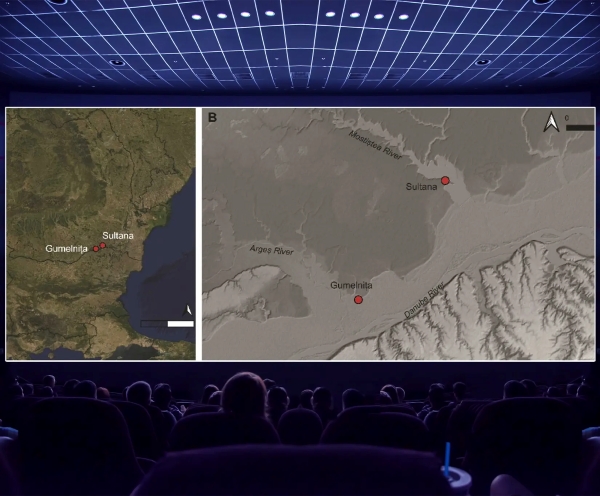
Sultana este una dintre așezările cheie de tip tell ale culturii Gumelnița din regiunea Dunării de Jos. În a doua jumătate a mileniului al V-lea î.Hr., această zonă a trecut prin schimbări sociale și de mediu majore. Noile rezultate sugerează că gestionarea culturilor la Sultana a avut loc într-un context de disponibilitate redusă a apei și de instabilitate hidroclimatică generalizată, înaintea unui episod climatic major produs acum 5.900 de ani (5.9 ka BP), recunoscut în diferite părți ale emisferei nordice.
Prin analizarea valorilor izotopilor de carbon și azot din resturile vegetale carbonizate, autorii au putut investiga diverse aspecte privind condițiile de creștere a plantelor, inclusiv disponibilitatea apei și gestionarea solului. Datările directe cu radiocarbon au ajutat la confirmarea poziției cronologice a resturilor arheobotanice și la plasarea acestora în secvența mai largă de locuire și de schimbare a mediului de la situl respectiv.
Pe lângă cereale, studiul evidențiază și rolul plantei Chenopodium album, cunoscută sub numele popular de „talpa gâștei” sau „lobodă porcească”. Deși nu este o cereală, această plantă produce semințe comestibile și crește adesea în soluri perturbate, bogate în nutrienți, inclusiv în zone apropiate de așezări și câmpuri cultivate. Prezența sa la Sultana sugerează că aceste comunități s-ar fi putut baza pe o gamă mai largă de resurse vegetale decât doar cerealele.
Acest aspect este deosebit de relevant într-un context de instabilitate hidroclimatică. Dacă reducerea disponibilității apei afecta cultivarea cerealelor, plante precum Chenopodium album ar fi putut oferi o resursă alimentară suplimentară sau complementară. Departe de a fi o descoperire marginală, prezența sa indică o economie vegetală flexibilă, în care comunitățile utilizau atât plante cultivate, cât și plante reziliente disponibile local.
Prin urmare, studiul demonstrează că resturile vegetale carbonizate ne pot spune mult mai multe decât ceea ce mâncau oamenii. Ele pot dezvălui, de asemenea, modul în care comunitățile preistorice au răspuns la presiunea mediului, cum și-au gestionat câmpurile și cum și-au diversificat resursele vegetale în timp de incertitudine. În loc să trateze culturile ca pe niște indicatori pasivi ai climei, articolul subliniază valoarea lor ca dovezi ale procesului decizional uman. Rezultatele izotopice reflectă nu doar condițiile de mediu, ci și modul în care comunitățile din trecut au selectat, cultivat și gestionat plantele ca răspuns la circumstanțele schimbătoare.
Descoperirile contribuie la dezbaterile mai largi privind reziliența, vulnerabilitatea și transformarea socială în regiunea preistorică a Europei de Sud-Est. De asemenea, acestea subliniază importanța integrării arheobotanicii, a analizei izotopilor stabili și a datării cu radiocarbon pentru o mai bună înțelegere a relației dintre schimbările de mediu și strategiile agricole umane din trecut.
Referință completă
García-Vázquez, A., Golea, M., Coman, P., Schlütz, F., Kirleis, W., Müller, J., & Lazăr, C. 2026. Managing crops under hydroclimatic instability before the 5.9 ka event: stable isotope and radiocarbon evidence from the Sultana tell (Romania). Quaternary Environments and Humans, 4(2), 100108. https://doi.org/10.1016/j.qeh.2026.100108.
New study reveals how Chalcolithic communities managed crops at the end of the 5th millennium BC
A new study published in Quaternary Environments and Humans provides fresh insights into how Chalcolithic communities at the Sultana tell settlement in Romania managed their crops during a period of hydroclimatic instability in the second half of the 5th millennium BC.
The article, entitled Managing crops under hydroclimatic instability before the 5.9 ka event: stable isotope and radiocarbon evidence from the Sultana tell (Romania), combines stable isotope analysis and direct radiocarbon dating of charred plant remains, including cereal grains and seeds of Chenopodium album. Together, these remains offer a rare opportunity to explore not only when these plants were used, but also the environmental conditions in which they grew.
The study is the result of a joint collaboration between the Romanian team, formed by members of the ArchaeoScience Platform (ASp) at the Research Institute of the University of Bucharest and the “Vasile Pârvan” Institute of Archaeology, and the German team from the Institute for Prehistoric and Protohistoric Archaeology, Kiel University.
Sultana is one of the key Gumelnița tell settlements in the Lower Danube region. During the second half of the 5th millennium BC, this area underwent major social and environmental changes. The new results suggest that crop management at Sultana took place in a context of reduced water availability and broader hydroclimatic instability before the 5.9 ka BP event, a major climatic episode recognised in different parts of the Northern Hemisphere.
By analysing the carbon and nitrogen isotope values of charred plant remains, the authors were able to investigate aspects of plant growing conditions, including water availability and soil management. Direct radiocarbon dates helped to confirm the chronological position of the archaeobotanical remains and place them within the wider sequence of occupation and environmental change at the site. Beyond cereals, the study also highlights the role of Chenopodium album, commonly known as fat-hen or white goosefoot. Although it is not a cereal crop, this plant produces edible seeds and often grows in disturbed, nutrient-rich soils, including areas close to settlements and cultivated fields. Its presence at Sultana suggests that these communities may have relied on a broader range of plant resources than cereals alone. This is particularly relevant in a context of hydroclimatic instability. If reduced water availability affected cereal cultivation, plants such as Chenopodium album could have provided an additional or complementary food resource. Rather than representing a marginal find, its presence points to a flexible plant economy in which communities made use of both cultivated crops and locally available resilient plants.
The study therefore shows that charred plant remains can tell us much more than what people ate. They can also reveal how prehistoric communities responded to environmental pressure, how they managed their fields, and how they diversified their plant resources in times of uncertainty. Rather than treating crops as passive indicators of climate, the article emphasises their value as evidence for human decision-making. The isotope results reflect not only environmental conditions, but also how past communities selected, cultivated and managed plants in response to changing circumstances.
The findings contribute to wider debates on resilience, vulnerability and social transformation in prehistoric southeastern Europe. They also highlight the importance of integrating archaeobotany, stable isotope analysis and radiocarbon dating to better understand the relationship between environmental change and human agricultural strategies in the past.
Full reference
García-Vázquez, A., Golea, M., Coman, P., Schlütz, F., Kirleis, W., Müller, J., & Lazăr, C. 2026. Managing crops under hydroclimatic instability before the 5.9 ka event: stable isotope and radiocarbon evidence from the Sultana tell (Romania). Quaternary Environments and Humans, 4(2), 100108. https://doi.org/10.1016/j.qeh.2026.100108.